
How did Juzhiyi complete the bracket delivery for the photovoltaic power station on more than 8,500 acres of water?
More than 8,500 acres of water area, 64 photovoltaic power generation arrays, and an installed capacity of about 276 MWp on the AC side—these three figures outline the scale of a large-scale fishery-solar hybrid power station.
In Dunshang Town, Ganyu District, Lianyungang, Jiangsu Province, the Jiangsu Huadian 276MW solar-fishery complementary photovoltaic power generation project has achieved full-capacity grid connection. Above the water, photovoltaic modules continuously generate electricity; below the water, fishponds retain their aquaculture function, allowing the same space to simultaneously support clean energy production and fishery utilization.
As the project's support system supplier, Juzhiyi's challenge is not only to "make" the support systems, but also to ensure that they can withstand the test of the aquatic environment and be delivered to the site continuously and stably according to the construction schedule.
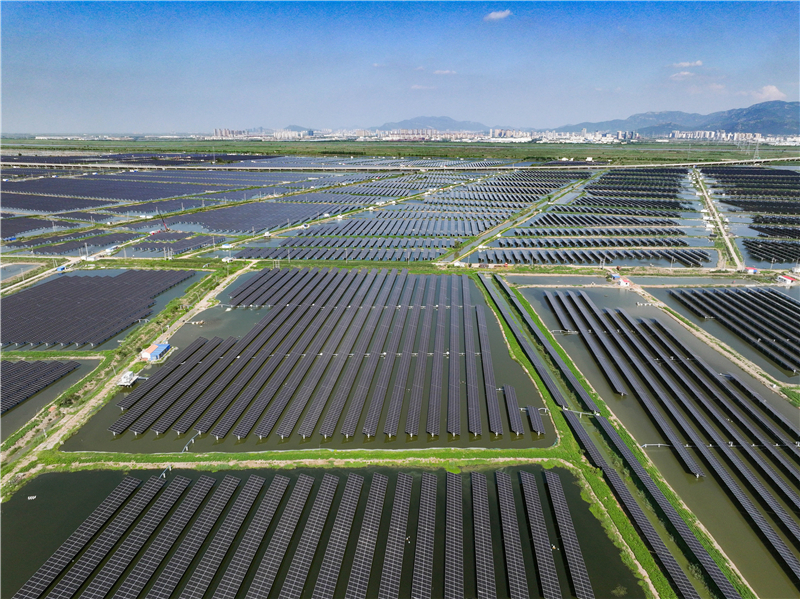
With a planned capacity of nearly 276 MWp on the water, the first challenge is ensuring stability.
The Ganyu Dunshang project has an installed capacity of approximately 276MW on the AC side, covering an area of approximately 8,503 mu. Compared with ordinary ground-mounted power stations, the large area of fishponds and aquaculture waters brings a more complex operating environment: long-term high humidity, water vapor erosion, and continuous array arrangement all place higher demands on the structural stability, corrosion resistance, and long-term durability of the support structure.
The support structure, though seemingly just a "skeleton" beneath the components, directly affects the stable operation of the array. Especially above water, a slight deviation, when superimposed on thousands or tens of thousands of components, can affect installation efficiency and may become a hidden danger in long-term operation.
Therefore, Juzhiyi strictly organizes production according to project design and technical requirements, controlling manufacturing deviations item by item from component dimensions, hole accuracy, molding quality to surface quality, to ensure consistency between different batches of products. In Juzhiyi's bracket product system, the design service life is no less than 25 years; in terms of manufacturing, this means that every process must be responsible for long-term reliable operation.
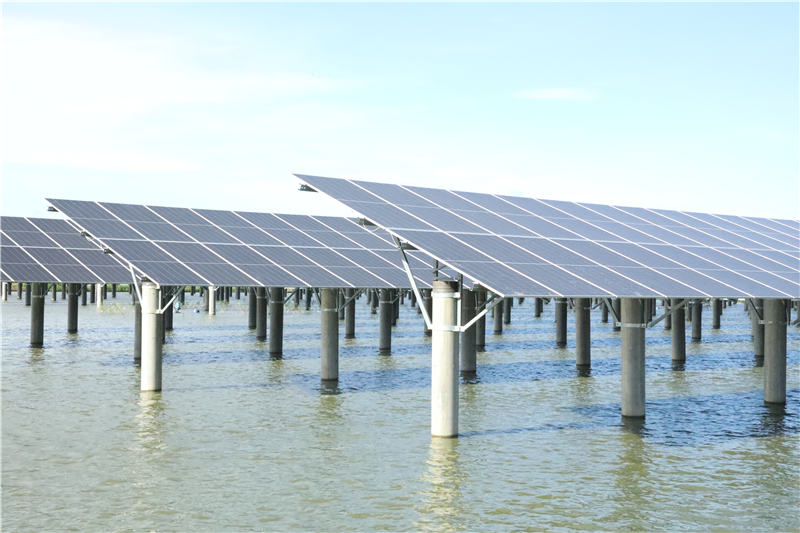
With 64 formations under continuous construction, ensuring adequate supply is equally crucial.
If stability determines whether a support structure can "stand firm" for a long time, then supply capacity determines whether a project can be "built quickly" as planned.
Once a large-scale photovoltaic project enters its concentrated construction phase, the support structures need to be brought to the site in batches, following the pile foundation and module installation stages. Delays in any of these stages—raw material procurement, production scheduling, processing and manufacturing, quality inspection, warehousing, and shipping—can affect subsequent construction.
In response to the characteristics of large project scale, multiple delivery batches, and fast on-site pace, Juzhiyi has established a special support mechanism to further break down the project plan into production and shipping stages, and dynamically adjust the schedule according to the on-site progress to keep the factory and project sides in sync.
Large-scale manufacturing capabilities provide the foundation for this collaboration. Currently, Juzhiyi has more than ten automated production lines, including automated steel profile production, CNC cutting, laser cutting, and welding, with a monthly production capacity of 1.2GW for photovoltaic brackets and related steel structures. For the Ganyu Dunshang project, production capacity is not just a number, but also means maintaining a stable supply during the concentrated delivery phase, providing support for continuous construction of the project.
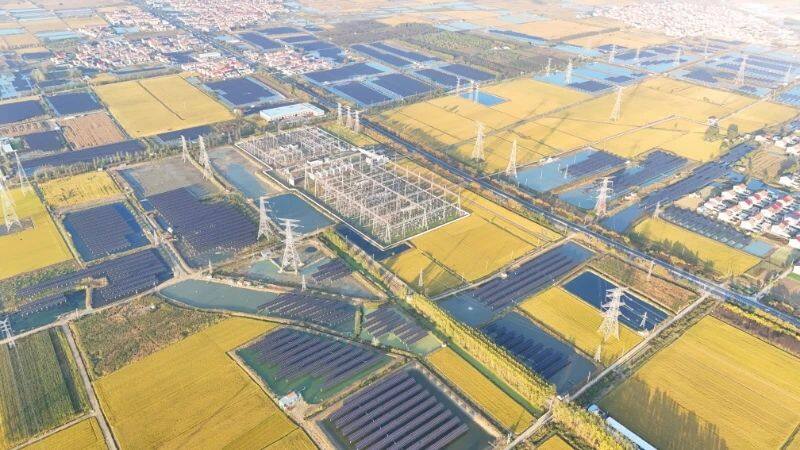
From a single component to a power plant, delivery is a complete chain.
Support supply is not just about product delivery. True project delivery involves a complete chain of processes, including technology, production, quality, warehousing, and logistics.
During mass production, Juzhiyi organizes operations according to drawings, processes, and technical requirements, and strengthens process quality control through self-inspection, delivery inspection, and special inspection. In terms of warehousing and shipping, products are arranged to arrive on-site in accordance with the installation sequence to reduce problems such as mismatch and waiting for materials, creating smoother installation conditions for construction.
The larger the project, the more crucial the consistency of details becomes. Whether a component's dimensions are accurate, whether a hole position matches, and whether a batch of products arrives on time may seem like minor issues; however, when these are scaled up to a project volume of 276 MWp, they collectively determine the project's installation efficiency and delivery quality.
This is also Juzhiyi's understanding of "delivery capability": it is not an additional service outside of the product, but part of the bracket solution itself.
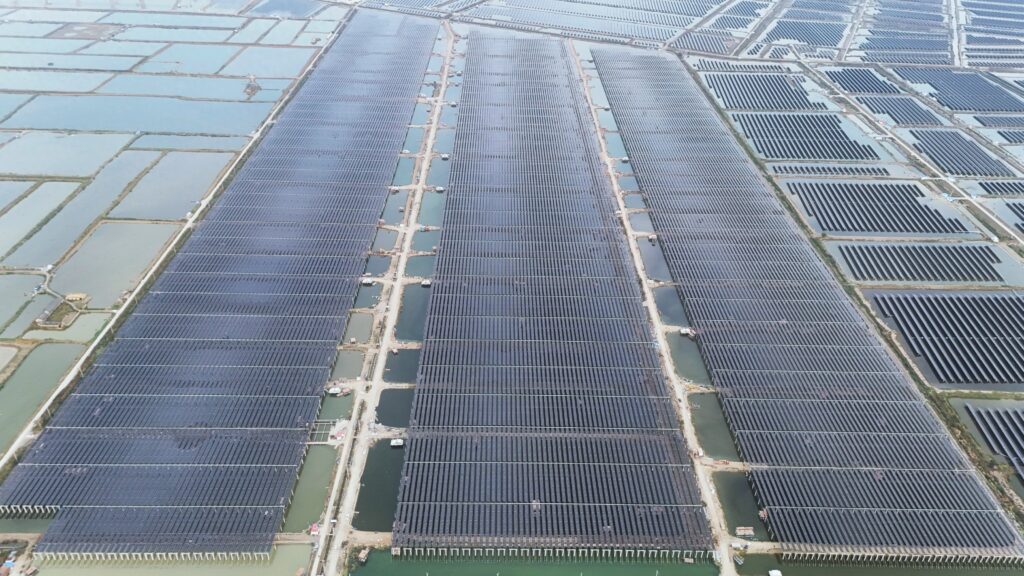
Full-capacity grid connection allows the same body of water to unleash dual value.
On December 27, 2024, the Ganyu Dunshang project achieved full-capacity grid connection. With 64 photovoltaic arrays in operation, the photovoltaic arrays above approximately 8,500 mu of water began to continuously output green electricity, while the aquaculture function continued to be maintained below the water surface.
The project generates an average of 460 million kilowatt-hours of electricity per year, which not only enhances the region's clean energy supply capacity, but also provides a new practical model for the coordinated development of fisheries and new energy through the reuse of space for "power generation on the water and aquaculture underwater".
In the future, Juzhiyi will continue to focus on the photovoltaic support system field, providing more stable products, a more efficient manufacturing system, and more reliable project delivery capabilities to serve diversified new energy scenarios such as ground-mounted photovoltaics, fishery-solar complementary projects, and agricultural-solar complementary projects, ensuring that every support system can steadily support the modules and also support the long-term value of green energy projects.
 EN
 ZH_CN